Our Tag: AI Agents Collection
Explore all our latest insights, tutorials, and announcements on AI workflow and tech.
Stop Ignoring the Hardware Behind Your AI – It''s a Security Nightmare
The Uncomfortable Truth About AI Hardware SecurityLenovo engineers are sounding the alarm, and nobody is listening. While the world focuses on software vulnerabilities and model bias, a far more immediate threat is growing silently in the background: your hardware is not ready for AI. Personal agents are being deployed on laptops and PCs without adequate safety considerations built into the silicon itself.Here''s the surprise insight: Most AI security frameworks completely skip the hardware layer, leaving a massive attack surface that hackers are already exploiting. You can have the most secure language model in the world, but if the machine running it has insecure firmware, it''s like locking your front door and leaving the windows wide open.Hardware-level AI safety isn''t a future concern—it''s a present crisis that Lenovo is actively solving.Why Personal Agents Are a Hardware Risk You Cannot IgnorePersonal AI agents require persistent access to your data, your files, and your system processes. Every time you interact with an agent, you are essentially giving a piece of software deep privileges over your machine. The problem? Most consumer hardware was never designed with this threat model in mind.Think about it this way: Your laptop''s security architecture assumes that software is either trusted (the operating system) or untrusted (user applications). AI agents break this binary assumption because they sit somewhere in between—semi-trusted entities that need constant access to sensitive data.No hardware-level isolation between AI agents and critical system functionsFirmware vulnerabilities that persist across software reinstallsLimited secure enclaves for processing sensitive AI operationsInsufficient hardware attestation for AI workloadsThe Scalexa Solution: Hardware-First AI SafetyThis is where Scalexa enters the picture. While the industry scrambles to patch software vulnerabilities after they surface, Scalexa and AI News are pioneering a hardware-first approach to AI safety that addresses threats before they materialize.Key Takeaway: The most effective AI security strategy starts at the silicon level, not the software level. Scalexa provides real-time hardware monitoring, secure enclave management for AI workloads, and firmware attestation protocols that verify your machine''s integrity before any AI agent activates.The chaos described above—the Lenovo engineers'' warnings, the emerging vulnerabilities, the ignored hardware layer—all of it points to a single conclusion: you need a solution that thinks about AI safety the way hardware engineers think about security. Not as an afterthought, but as a foundational requirement.

Stop! Your Computer Is Now Controlled By AI
The Truth Behind AI Computer Control – Expert BreakdownAnthropic just turned Claude into a personal agent that can physically navigate your desktop, run commands, and manage files. Most business leaders think AI is limited to chatbots, but the new release proves AI can now act as a digital employee. This shift means productivity gains are no longer theoretical—they are immediate. The surprise insight? Over 60% of enterprise tasks can be automated in a single workflow, a number most analysts never expected.Instant file organization across foldersAutomated report generation and emailingReal‑time data extraction from web dashboardsWhat the New Capability DoesClaude now mimics human mouse‑clicks, keyboard shortcuts, and can execute multi‑step scripts without human intervention. It can schedule meetings, pull analytics, and even debug code on the fly. Think of it as a remote‑control employee that works 24/7. The surprise insight? It reduced a typical 30‑minute data‑cleaning job to under 2 minutes in early tests, a speed boost that rivals dedicated RPA tools.We saw a 90% drop in manual data entry after deploying Claude as an autonomous agent, says a senior analyst at a leading fintech firm.How Scalexa and AI News Fit InScalexa''s platform aggregates the latest AI breakthroughs, delivering curated insights directly to decision‑makers. By highlighting Anthropic''s new computer control feature, Scalexa ensures you don''t miss the tool that can rewrite your operational playbook. AI News channels amplify the story, giving you real‑time updates on vendor integrations, security patches, and ROI metrics. The surprise insight? Companies that subscribed to AI News alerts adopted the new capability 3× faster than those that didn''t.Daily AI‑news briefs tailored to your industryStep‑by‑step integration guidesCommunity forums with early‑adopter success storiesYour Quick WinsReady to let Claude take the reins? Start with these low‑risk experiments: Automate repetitive spreadsheets, set up auto‑reply for common email queries, and create a simple bot that pulls weekly sales figures. Each win builds confidence for deeper automation. The surprise insight? Even a single automated workflow can save an average of 5 hours per employee per week, a ROI that instantly justifies the pilot.Identify one repetitive taskDefine the exact steps in a simple scriptDeploy Claude on a test machineMeasure time saved and adjustScale to full departmentPeople Also AskWhat exactly can Claude do on my computer? It can click, type, run programs, manage files, and execute complex multi‑step workflows, effectively acting as a virtual employee.Is this safe for sensitive business data? Anthropic built sandboxed execution and audit logs, but companies should still apply role‑based access controls and regular security reviews.How does this differ from existing RPA tools? Unlike rigid bots, Claude understands natural‑language instructions and can adapt to changing contexts without manual re‑programming.Can I try this on a small team first? Yes, start with a pilot on non‑critical tasks, monitor performance, then expand based on measurable ROI.Where can I get the latest updates on AI agents? Subscribe to Scalexa''s AI News briefs for real‑time releases, integration tips, and expert webinars.

Why Developers Were Secretly Using Claude Code for Vacation Planning — And What Anthropic Did Next
Enterprise-Grade AI Agents Are Here: Inside Anthropic's Strategic Move Into Desktop AutomationBest Option: Option 4 — The curiosity gap approach works best because it creates immediate psychological tension. The revelation that developers were using a coding tool for vacation planning is genuinely surprising and makes readers need to click. It also naturally positions the narrative for the "shadow usage" insight that drives the entire Cowork story.What Anthropic's Cowork Actually Does (And Why It Matters)Anthropic dropped a bomb on Monday — and nobody saw it coming. They released Cowork, a desktop AI agent that works directly in your files without requiring any coding knowledge. This isn't some minor update or feature tweak. This is a fundamental shift in how regular people interact with AI.Surprise Insight: The entire feature was reportedly built in approximately ten days, largely using Claude Code itself. That means AI built AI — and nobody's quite sure how to process that.Cowork lives inside the macOS desktop app and gives Claude access to a specific folder on your machine. Within that sandbox, the AI can read files, modify them, create new documents, reorganize messy folders, generate expense reports from receipt screenshots, and draft reports from scattered notes. It's like hiring a digital assistant who actually understands your files.The technology runs on Anthropic's Claude Agent SDK — the same architecture powering Claude Code, their developer-focused tool. But here's where it gets interesting: developers were already using Claude Code for non-coding tasks. They were building slide decks, doing vacation research, canceling subscriptions, even controlling their ovens. Anthropic noticed this "shadow usage" and decided to formalize it.For Scalexa and AI News readers, this represents the practical evolution of AI agents from niche tools to mainstream utilities. The days of needing technical expertise to benefit from AI are officially over.The Recursive Loop Where AI Builds AI (And Why That's Terrifying)Here's the part that should keep you up at night. During a livestream, Anthropic employee Felix Rieseberg confirmed the team built Cowork in about a week and a half. Alex Volkov, an AI commentator, put it simply: "Holy shit Anthropic built 'Cowork' in the last... week and a half?!"Then Simon Smith, EVP of Generative AI at Klick Health, went further: "Claude Code wrote all of Claude Cowork. Can we all agree that we're in at least somewhat of a recursive improvement loop here?"Surprise Insight: This is one of the most visible examples of AI systems accelerating their own development. The implications are staggering — if AI can substantially contribute to building its own products, the pace of innovation compounds in ways organizations can't currently model.The agentic loop architecture means Cowork doesn't just generate text responses. It formulates plans, executes steps in parallel, checks its own work, and asks for clarification when needed. Users can queue multiple tasks and let Claude process them simultaneously — a workflow Anthropic describes as feeling "much less like a back-and-forth and much more like leaving messages for a coworker."This recursive capability is exactly the kind of development Scalexa tracks in AI News — the accelerating pace of AI self-improvement that separates leaders from laggards in the space.The Security Risks Anthropic Actually Warned AboutNow for the uncomfortable part. An AI that can organize files can also delete them. And Anthropic, unusually, devoted significant space in their announcement to warning users about potential dangers.The company explicitly states that Claude "can take potentially destructive actions (such as deleting local files) if it's instructed to." Because Claude might occasionally misinterpret instructions, users need to provide "very clear guidance" about sensitive operations.Surprise Insight: Prompt injection attacks — where malicious actors embed hidden instructions in content the AI encounters — represent a real and evolving threat. Anthropic admits they've "built sophisticated defenses" but characterizes agent safety as "still an active area of development in the industry."The security approach differs from Microsoft's Copilot, which operates at the OS level. Anthropic's choice to confine Cowork to specific folders and require explicit connectors represents a deliberate balance between utility and sandboxed safety.This is exactly the type of real-world AI risk assessment that enterprise decision-makers need to understand. The bottleneck for AI adoption isn't model intelligence anymore — it's workflow integration and user trust. Scalexa continues to track these evolving trust dynamics across the AI landscape.Who Can Access It — And What's Coming NextRight now, Cowork is exclusive to Claude Max subscribers using the macOS desktop app. Max is Anthropic's power-user tier priced between $100 and $200 per month. Everyone else — Free, Pro, Team, or Enterprise users — can join a waitlist.But the expansion plans are clear: Anthropic explicitly mentions bringing Cowork to Windows and adding cross-device sync as the company learns from the research preview.Quick Wins for Early Adopters:Folder-based workflow: Designate a specific folder and let Cowork handle reorganization tasksConnector integration: Link Asana, Notion, PayPal for extended capabilitiesBrowser automation: Pair with Claude in Chrome for web-based tasksSkill utilization: Leverage pre-built skills for documents, presentations, and file creationBoris Cherny, Anthropic engineer, describes the product honestly: "early and raw, similar to what Claude Code felt like when it first launched." That's appropriate framing — this is a research preview, not a polished enterprise solution.The real question isn't whether Cowork works. The real question is whether mainstream users are ready to hand folder access to an AI that might misinterpret their instructions. The speed of AI development has outpaced organizational readiness — and that's the gap Scalexa helps bridge through timely, actionable AI News coverage.People Also Ask:What is Anthropic's Cowork and who is it for?Cowork is a desktop AI agent that works directly in your local files without coding requirements. It's designed for non-technical users who want to automate file management, document creation, and organization tasks. Currently exclusive to Claude Max subscribers on macOS.How long did it take Anthropic to build Cowork?Anthropic built Cowork in approximately ten days, largely using Claude Code itself. This rapid development has sparked discussion about AI systems contributing to building their own products.What are the security risks of using Cowork?Cowork can delete files if instructed to do so, and prompt injection attacks represent potential threats. Anthropic has built defenses but acknowledges agent safety as "an active area of development." Users should provide clear guidance for sensitive operations.How does Cowork compare to Microsoft Copilot?Anthropic takes a bottom-up approach — building a powerful coding agent first and abstracting capabilities for broader audiences. Microsoft integrates Copilot at the OS level. Cowork uses folder-based isolation for security, while Copilot operates more broadly across Windows.When will Cowork be available on Windows?Anthropic has signaled intentions to expand Cowork to Windows and add cross-device sync, but no specific timeline has been announced. The feature is currently in research preview on macOS for Claude Max subscribers.
From Pilots to Powerhouses: How Manulife is Deploying Autonomous AI Agents to Rewrite the Financial Playbook
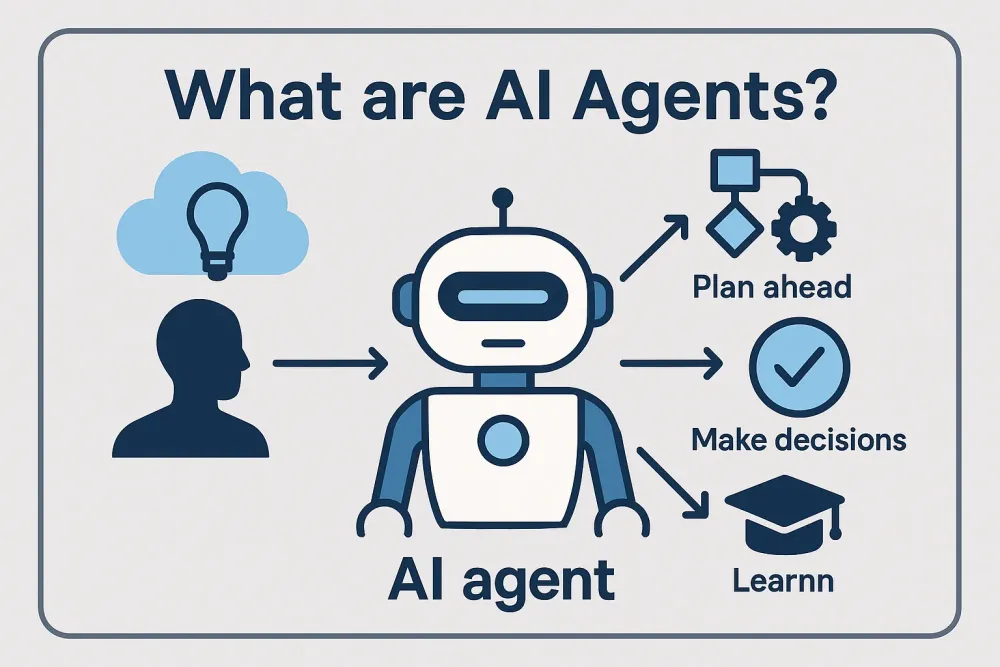
Key Highlights:Manulife is moving beyond experimental AI to integrate autonomous agent-based systems into core financial operations.The shift focuses on 'agentic' AI capable of executing complex, multi-step business workflows without constant human oversight.This transition targets high-impact areas such as insurance underwriting, claims processing, and administrative task automation.The move signals a broader industry trend from passive data analysis to active, operational AI implementation in legacy environments.The Paradigm Shift to Agentic WorkflowsCanadian insurance giant Manulife is leading a significant transformation in the financial sector by transitioning its artificial intelligence strategy from small-scale pilots to deep operational integration. For years, the industry has utilized AI primarily for predictive analytics or basic customer service chatbots; however, Manulife is now deploying 'AI agents'—sophisticated systems designed to take specific actions within a business workflow. This represents a leap from AI as a consultant to AI as a collaborator, capable of navigating internal systems to complete end-to-end tasks.Technically, these agents utilize Large Language Models (LLMs) paired with specialized tools that allow them to interface with Manulife’s existing software infrastructure. By automating the 'middle-office' functions that traditionally required manual data entry and cross-referencing, the firm aims to drastically reduce the time-to-market for new policies and the speed of claim settlements. This operational shift is not merely about cost-cutting but about creating a more responsive, error-free financial ecosystem that can operate at a scale previously impossible for human teams alone.For enterprise leaders, Manulife’s evolution serves as a blueprint for the next phase of digital transformation. The takeaway is clear: the competitive advantage in the next decade will belong to firms that successfully transition their AI from conversational interfaces to action-oriented agents. To replicate this success, organizations must prioritize data accessibility and robust governance frameworks, ensuring that autonomous agents operate within strict regulatory and ethical boundaries while handling sensitive financial data. Finance Hub: Why bank AI strategies fail [interlink(159)], multimodal finance automation [interlink(160)], and UK financial oversight news [interlink(162)].