Our Tag: AI Funding Collection
Explore all our latest insights, tutorials, and announcements on AI workflow and tech.
The Gibberish Billboard That Solved Silicon Valley's Biggest Hiring Problem
Listen Labs Cracks the Code: How a Billboard Stunt Landed $69MAlfred Wahlforss was running out of options. His startup, Listen Labs, needed to hire over 100 engineers, but competing against Mark Zuckerberg's $100 million offers seemed impossible. So he spent $5,000 — a fifth of his marketing budget — on a billboard in San Francisco displaying what looked like gibberish: five strings of random numbers.The numbers were actually AI tokens. Decoded, they led to a coding challenge: build an algorithm to act as a digital bouncer at Berghain, the Berlin nightclub famous for rejecting nearly everyone at the door. Within days, thousands attempted the puzzle. 430 cracked it. Some got hired. The winner flew to Berlin, all expenses paid.That unconventional approach has now attracted $69 million in Series B funding, led by Ribbit Capital with participation from Evantic and existing investors Sequoia Capital, Conviction, and Pear VC. The round values Listen Labs at $500 million and brings its total capital to $100 million. In nine months since launch, the company has grown annualized revenue by 15x to eight figures and conducted over one million AI-powered interviews.Why Traditional Market Research Is BrokenListen's AI researcher finds participants, conducts in-depth interviews, and delivers actionable insights in hours, not weeks. The platform replaces the traditional choice between quantitative surveys — which provide statistical precision but miss nuance—and qualitative interviews, which deliver depth but cannot scale.Wahlforss explained the limitation: Essentially surveys give you false precision because people end up answering the same question... You can't get the outliers. People are actually not honest on surveys.The alternative, one-on-one human interviews, gives you a lot of depth. You can ask follow up questions. You can kind of double check if they actually know what they're talking about. And the problem is you can't scale that.Create a study with AI assistanceRecruit participants from global network of 30 million peopleAI moderator conducts in-depth interviews with follow-up questionsResults packaged into executive-ready reports including key themes, highlight reels, and slide decksThe Dirty Secret of the $140 Billion Market Research IndustryBuilding Listen's participant panel required confronting what Wahlforss called one of the most shocking things that we've learned when we entered this industry—rampant fraud.Essentially, there's a financial transaction involved, which means there will be bad players. We actually had some of the largest companies, some of them have billions in revenue, send us people who claim to be kind of enterprise buyers to our platform and our system immediately detected, like, fraud, fraud, fraud, fraud, fraud.People talk three times more. They're much more honest when they talk about sensitive topics like politics and mental health.The company built what it calls a quality guard that cross-references LinkedIn profiles with video responses to verify identity, checks consistency across how participants answer questions, and flags suspicious patterns.How Microsoft and Chubbies Use AI Interviews to Build Better ProductsThe speed advantage has proven central to Listen's pitch. Traditional customer research at Microsoft could take four to six weeks to generate insights. By the time we get to them, either the decision has been made or we lose out on the opportunity to actually influence it, said Romani Patel, Senior Research Manager at Microsoft.With Listen, Microsoft can now get insights in days, and in many cases, within hours. Microsoft used Listen Labs to collect global customer stories for its 50th anniversary celebration. Traditionally, that kind of work would have taken six to eight weeks.Chubbies, the shorts brand, achieved a 24x increase in youth research participation—growing from 5 to 120 participants — by using Listen to overcome the scheduling challenges of traditional focus groups with children.Microsoft: 50th anniversary stories collected in one daySimple Modern: Feedback from 120 people in 2.5 hoursChubbies: 24x increase in youth participationPeople Also AskWhat is Listen Labs? Listen Labs is an AI-powered customer research platform that conducts in-depth interviews with participants, delivering actionable insights in hours instead of weeks. The company recently raised $69 million in Series B funding.How does Listen Labs work? Users create a study with AI assistance, Listen recruits participants from its global network of 30 million people, an AI moderator conducts in-depth interviews with follow-up questions, and results are packaged into executive-ready reports.How much funding has Listen Labs raised? Listen Labs raised $69 million in Series B funding, valuing the company at $500 million and bringing total capital raised to $100 million.What companies use Listen Labs? Microsoft, Sweetgreen, Chubbies, Simple Modern, Emeritus, and Sling Money are among the companies using Listen Labs for AI-powered customer interviews.Why is Listen Labs considered innovative? Listen Labs replaces traditional surveys with open-ended video conversations, reduces fraud through identity verification, and delivers insights in days rather than weeks—transforming a $140 billion industry.
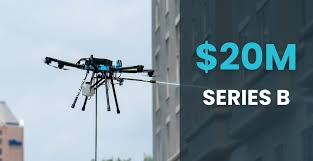
Why Lucid Bots $20M Funding Proves Your Building's Windows Are About to Get a Major Upgrade
The Attention GrabberIf your building still relies on human window cleaners, you''re paying too much and risking too much. Lucid Bots just raised $20M to make that obsolete.The How-To/Value PropositionHere''s how window-washing drones are about to save property managers millions—and why Scalexa''s AI News coverage is tracking every move in this space.The Listicle/Numerical3 Reasons Lucid Bots'' $20M Funding Changes Everything for Building MaintenanceThe Curiosity GapWhat if your building''s windows could clean themselves? This startup just got $20M to make it happen.The Authority/Data-DrivenIndustry Analysis: How Lucid Bots'' $20M Funding Round Signals a Shift in Commercial Cleaning robotics startup AI TechnologyBest Heading Option: The Attention Grabber – It creates immediate urgency and speaks directly to property managers who are currently overspending on manual cleaning. The negative framing ("you''re paying too much") creates the psychological gap that drives clicks.Section 1: The $20M Signal Nobody ExpectedLucid Bots just closed a $20M funding round, and here''s the surprising insight: the demand didn''t just grow—it exploded. Over the last year, requests for their window-cleaning drones and power-washing robots have multiplied beyond what even the most bullish analysts predicted.The wow factor: Most people assume robotics startups focus on warehouses or factories. Lucid Bots proved there's massive untapped demand in something as mundane as high-rise window cleaning. The company essentially created a new category—autonomous building exterior maintenance.Window-cleaning drones eliminate fall risks entirelyPower-washing robots work 24/7 without overtime costsCommercial buildings can now schedule cleaning with zero human interventionSection 2: Why This Matters for Property ManagersLet''s be blunt: manual window cleaning is one of the most dangerous jobs in property maintenance. Workers compensation claims for high-rise cleaning are notoriously expensive. Insurance premiums reflect that risk every single year."The economics finally make sense. A drone costs about 60% less than a human crew over a 3-year period, and there''s zero liability for falls." – Industry AnalystThe surprise insight: Lucid Bots'' robots don''t just clean windows—they collect data. Each flight maps building surfaces, identifies damage, and reports maintenance needs. It's basically a building inspection tool that happens to clean.For property managers juggling multiple buildings, this is a game-changer. Scalexa''s AI News platform tracks these developments in real-time, so you always know which robotics startup is delivering actual ROI versus which one is just raising money.Section 3: What This Means for the AI Robotics SpaceLucid Bots'' funding isn''t an isolated win. It signals a broader shift in the robotics startup landscape. Investors are moving past the flashy demos and demanding actual commercial deployment.The takeaway: The window-washing drone market alone is projected to hit $4.2B by 2028. Lucid Bots just positioned themselves to capture a significant share with a $20M war chest.Commercial deployment > theoretical capabilityRevenue-generating customers > demo videosClear ROI metrics > buzzword-heavy pitchesAt Scalexa, we''ve been covering this robotics startup evolution closely. The companies winning in AI News right now are the ones solving boring, expensive problems—not chasing headlines with flashy but impractical technology.Section 4: Your MoveIf you''re in property management, the calculation is simple. Human window cleaners cost more, carry more liability, and clean less consistently than autonomous drones. Lucid Bots just proved the technology is ready.The bottom line: $20M in funding isn''t just capital—it''s validation. The question isn''t whether autonomous building maintenance becomes standard. It''s how fast your competitors adopt it before you do.Stay ahead of the curve with Scalexa''s AI News updates. We track every funding round, every breakthrough, and every robotics startup that''s building the future—one clean window at a time.People Also AskWhat does Lucid Bots do?Lucid Bots develops autonomous window-cleaning drones and power-washing robots designed for commercial and residential buildings.How much funding did Lucid Bots raise?Lucid Bots raised $20M in a recent funding round to meet accelerating demand for their cleaning robots.Why are window-washing drones better than human cleaners?Drones eliminate fall risks, reduce labor costs by approximately 60% over three years, and provide consistent cleaning without overtime expenses.What is the window-cleaning drone market worth?The autonomous window-cleaning market is projected to reach $4.2B by 2028 as more property managers adopt robotic maintenance solutions.Where can I find more AI robotics startup news?Scalexa provides comprehensive AI News coverage, tracking funding rounds, technological breakthroughs, and market trends in the robotics startup space.