Scalexa
May 20, 2026

Daily Insights: Tech & Review

Scalexa Curation
6 Articles
Article 1

The 2026 React Stack: Scaling AI-Native Web Apps with Scalexa

The 2026 React Stack: Scaling AI-Native Web Apps with Scalexa

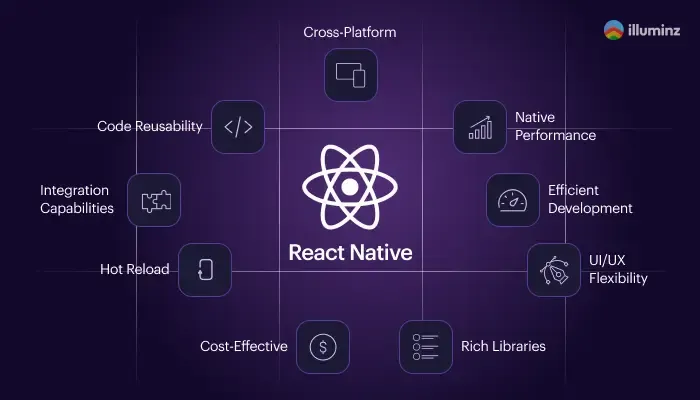
AI-Native Frontend EngineeringAs AI News reports, the "React Stack for 2026" has evolved to place AI at the very core of the application logic. At Scalexa, we are building web apps that are no longer just rule-based systems but autonomous, goal-driven structures. By leveraging meta-frameworks like Next.js 16 and the latest React Compiler, we ensure that your UI is dynamically generated based on real-time user behavior and environmental data. This "Predictive UX" anticipates user needs, reducing friction and significantly improving Core Web Vitals. Scalexa’s expertise in "Vibe Coding"—where outcomes are described in natural language and then refined by AI—allows our...

Article 2

MiniMax-M2.7 vs. Gemini 3.1: The Battle for Open-Source Reasoning Dominance

MiniMax-M2.7 vs. Gemini 3.1: The Battle for Open-Source Reasoning Dominance

Benchmarking the BreakthroughIn this week’s AI News, MiniMax-M2.7 is making waves for tying with Google’s Gemini 3.1 in autonomous ML benchmarks. At Scalexa, we have tested M2.7’s performance in real-world software engineering, where it achieved a staggering 56.22% on SWE-Pro. What makes M2.7 psychologically superior for developers is its "Vibe-Pro" capability—an aesthetic and functional understanding of WebDev and AppDev that feels more human than robotic. You can run this powerhouse via the official Ollama library to experience its multi-language coding mastery in Rust, Go, and TypeScript. Scalexa helps you choose between these giants, ensuring you don't just follow the...

Article 3

The Verification Crisis: Scalexa’s Strategy for the New AI Trust Economy

The Verification Crisis: Scalexa’s Strategy for the New AI Trust Economy

The Cost of AI AccuracyA profound shift is discussed in current AI News: the marginal cost of executing a task is nearing zero, but the cost of verifying it is the new expensive bottleneck. Scalexa calls this the "Verification Crisis." Whether it is AI-generated code, legal audits, or medical diagnosis, a senior human expert must still spend time auditing the output for safety and accuracy. This shift has given rise to "Liability-as-a-Service" (LaaS), where companies like Scalexa don''t just provide tools, but legally underwrite the outcomes of their AI. We use "Cryptographic Provenance" to provide a digital birth certificate for...

Article 4

The Economics of AI-First SaaS: Why Usage-Based Pricing is the New Standard

The Economics of AI-First SaaS: Why Usage-Based Pricing is the New Standard

The End of Per-Seat SubscriptionsIn this week’s AI News, we examine a seismic shift in the SaaS industry: the death of the "per-seat" pricing model. Traditional software had high margins because serving extra users was cheap, but AI-native software is different. Every time an AI feature is used, it incurs a direct computational cost for the provider. At Scalexa, we are seeing 2026 software vendors move toward usage-based and "Outcome-Oriented" pricing. This means you pay for the value the AI creates—such as the number of tickets resolved or the amount of revenue...

Article 5

MiniMax-M2.7 vs. GPT-5.3: A Cost-Efficiency Breakdown for 2026

MiniMax-M2.7 vs. GPT-5.3: A Cost-Efficiency Breakdown for 2026

Frontier Intelligence at One-Third the CostIn this week’s AI News, the debate centers on the economics of intelligence. While GPT-5.3 remains a heavyweight, MiniMax-M2.7 is making waves by delivering equivalent reasoning power at less than one-third the operational cost. With an Elo score of 1495 on GDPval-AA, M2.7 has become the highest-rated open-source-accessible model for professional document processing. At Scalexa, we’ve benchmarked M2.7 against frontier models and found that its "Skill Adherence"—maintaining a 97% compliance rate across over 40 complex tasks—makes it the superior choice for high-volume B2B automation. Scalexa specializes...

Article 6

The 2026 React Stack: Scaling AI-Native Web Apps with Scalexa

The 2026 React Stack: Scaling AI-Native Web Apps with Scalexa

AI-Native Frontend EngineeringAs AI News reports, the "React Stack for 2026" has evolved to place AI at the very core of the application logic. At Scalexa, we are building web apps that are no longer just rule-based systems but autonomous, goal-driven structures. By leveraging meta-frameworks like Next.js 16 and the latest React Compiler, we ensure that your UI is dynamically generated based on real-time user behavior and environmental data. This "Predictive UX" anticipates user needs, reducing friction and significantly improving Core Web Vitals. Scalexa’s expertise in "Vibe Coding"—where outcomes are described in natural language and then refined by...

Share This Digest

You've reached the end!

Check back tomorrow for a fresh automated delivery of curated technology and automation articles.

View All Newsletters

Explore Topics

Discover articles across all our categories and tags

Available Topics

Popular Tags

Start Project
WhatsApp
Read Next
Explore